What to do after a car accident
A car accident is stressful, but a simple checklist can help you stay safe and organized. This guide explains what to do right after a crash, what to document, and how the claim process usually works.
1) First, make sure everyone is safe
If you can, move to a safe spot away from traffic and turn on your hazard lights. Check yourself, your passengers, and the other people involved for injuries.
If anyone might be hurt, call 911 right away. Do not try to move someone who may have a head, neck, or back injury unless there is an immediate danger like fire.
If the crash is blocking traffic or involves serious damage, follow local police instructions and stay calm. Even a small accident can feel chaotic, so slow down and focus on the next safe step.
2) Call the police when needed and stay at the scene
In many states, you should report a crash if there are injuries, death, or enough damage to meet the state’s reporting rules. Even when police do not come to the scene, you may still need to file a report later.
Do not leave before you are allowed to leave. If the other driver wants to “just handle it privately,” it is usually safer to exchange information and document the crash anyway.
If police respond, ask how you can get the report number or where to find a copy later. That report can help when you talk with your insurer or a licensed agent or broker.

3) Exchange basic information, but protect your personal details
Exchange names, phone numbers, vehicle makes and models, license plate numbers, and insurance company names with the other driver. If there are witnesses, ask for their names and phone numbers too.
You do not need to share your Social Security number, full driver’s license number, or policy number on this site or with anyone who does not need it. Keep the conversation focused on the crash facts.
Try to stay polite and avoid arguing about fault at the scene. What happened may be unclear at first, and fault can depend on the police report, photos, witness statements, and the insurer’s review.
4) Document the scene before you leave
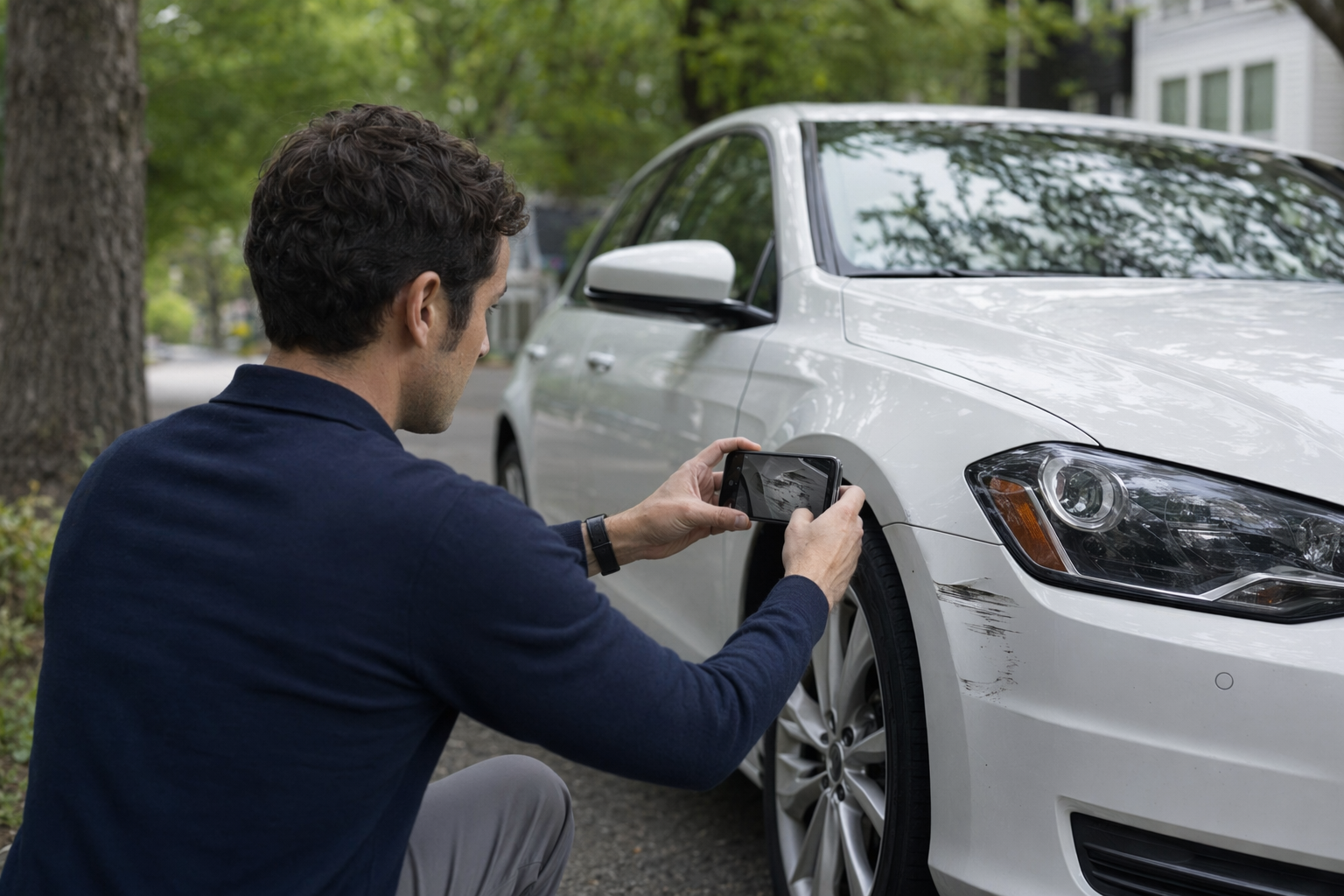
Use your phone to take clear photos and short videos if it is safe. Capture all vehicles, damage from different angles, license plates, skid marks, road conditions, traffic signs, weather, and anything else that helps show what happened.
Write down the time, location, direction of travel, and a short summary of the crash while it is still fresh. If you remember the sequence in steps, that can be easier to explain later.
Keep any medical notes, tow receipts, repair estimates, and rental or rideshare costs if they are connected to the accident. Simple records can make the claim process easier to follow.
5) Understand the basic claim process
After the crash, you or the other driver may start a claim with the insurance company involved. The insurer will usually ask for the date, place, people involved, photos, and the police report if there is one.
An adjuster may review the damage, ask follow-up questions, and decide what repairs or payments the policy may cover, based on the policy terms and state rules. Coverage varies by state and insurer, and not every loss is covered the same way.
If you are unsure how coverage works, how to read a car insurance policy can help you understand common terms. If you need help finding a licensed insurance agent or broker who can explain options, you can get matched.
6) Compare carefully after the accident
A crash is a good time to review whether your current policy still fits your needs. If your car is older, your commute changed, or you now have a new driver in the household, your coverage needs may be different than before.
When you compare policies, look past the price alone. Check liability limits, collision and comprehensive coverage, deductibles, rental reimbursement, medical-related coverages, and any state-specific requirements. The cheapest policy is not always the right one, especially if it leaves you exposed after another accident.
For a calm side-by-side approach, see how to compare car insurance quotes. A licensed insurance agent or broker can also help explain options in plain English, and CoverPair can connect you with one for free.
After a crash, focus on safety, photos, records, and a prompt insurance claim review — then compare coverage, not just price, so you are better protected next time.